
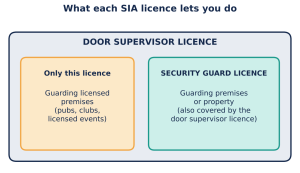
In the door supervisor vs security guard decision, one rule matters most. A door supervisor licence from the Security Industry Authority (SIA) also lets you work as a security guard. A security guard licence does not let you work as a door supervisor.
The rest depends on where you want to work, how long you can train for and what you want to spend. New to all this? Start with our guide on how to get an SIA licence.
Door supervisor vs security guard at a glance
| Point | Door supervisor | Security guard |
|---|---|---|
| What it covers | Guarding licensed premises | Guarding premises or property |
| Covers the other role? | Yes, it also allows security guarding | No |
| Licence needed in-house? | Yes, always | Usually not, but needed under a contract for services |
| Qualification | Level 2 Award for Working as a Door Supervisor in the Private Security Industry | Level 2 Award for Working as a Security Officer in the Private Security Industry |
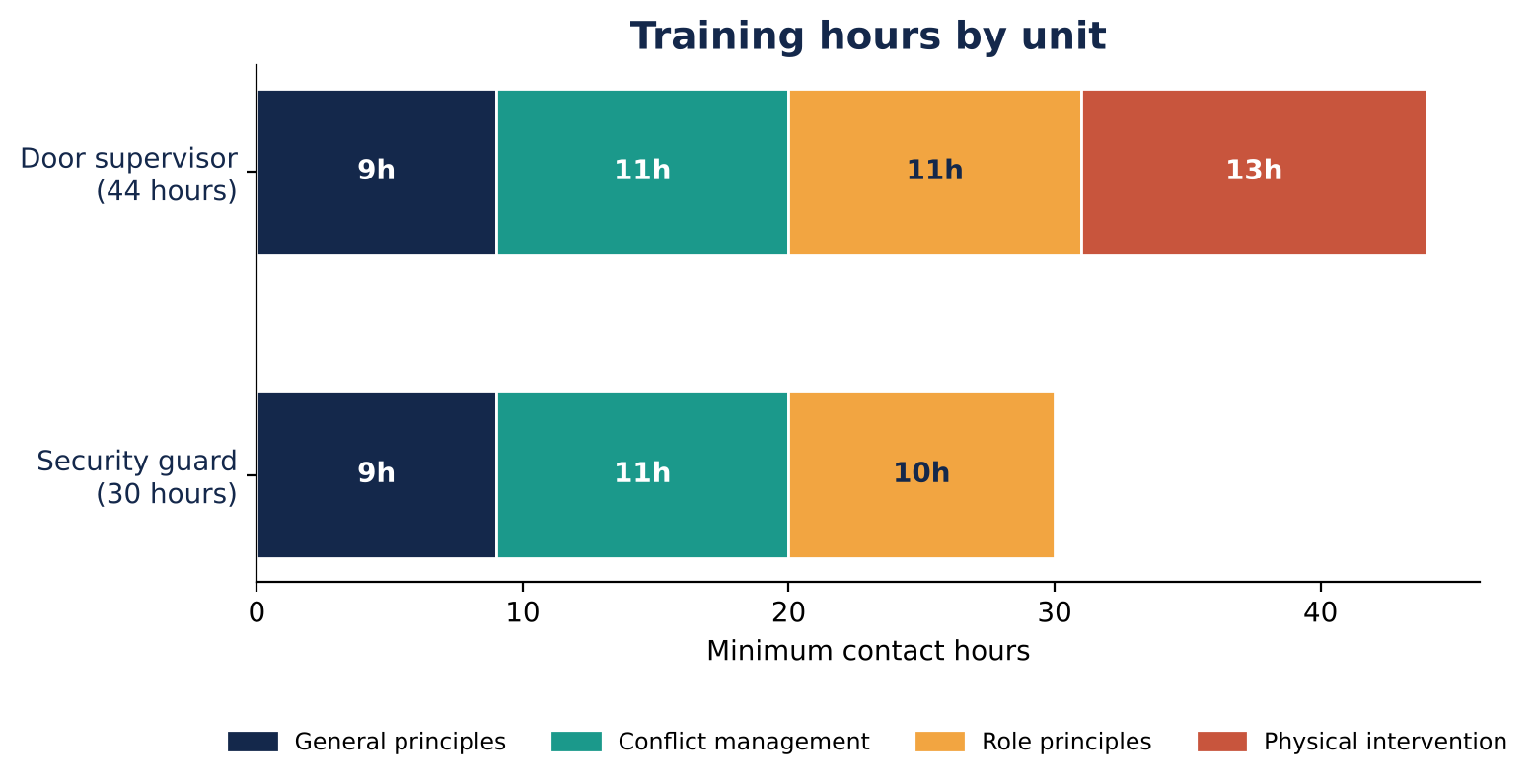
| Minimum contact time | 44 hours, over at least six days | 30 hours, over at least four days |
| Physical intervention unit | Yes | No |
The scope details come from the SIA’s guidance on who needs a licence. The training details come from its requirements for training centres.
The six and four day minimums apply only where a centre can evidence up to eight hours of self-study. Without it, the minimum is seven days for door supervisors and five for security guards.
What a door supervisor licence allows
You need this licence to guard licensed premises. That means a venue licensed to sell alcohol for drinking on the premises, or to provide regulated entertainment such as boxing or film screenings.
Door supervision needs a licence even when you are employed directly by the business you protect, which is known as working in-house. Only one other activity is treated this way: vehicle immobilising, in Northern Ireland.
Because the licence also covers security guarding, it is not limited to licensed venues.
What a security guard licence allows
This licence covers guarding premises or property against damage, theft, unauthorised entry or disorder. The SIA defines premises widely, so it includes any vehicle or moveable structure. Property usually means objects that belong to a person or business.
It does not cover door supervision, and its CCTV use is limited, as the next section explains.
Where a CCTV licence fits
CCTV means closed circuit television. Both licences cover using it to guard premises against unauthorised access, or to guard property against damage or theft.
They do not cover using it to guard premises against disorder or damage, or to protect people from injury or assault. That work needs a public space surveillance (CCTV) licence when it involves identifying people or monitoring their activities.
If monitoring is the work you want, look at the CCTV operator course instead.
What the training involves
Both qualifications are Level 2 awards. You need a first aid qualification, valid for at least another 12 months, before training starts. Our first aid training page covers the options, including a 1 day first aid course.
The SIA sets the units for each. Both include the general unit, Principles of Working in the Private Security Industry (9 contact hours), and Application of Conflict Management (11 hours).
The door supervisor qualification adds Principles of Working as a Door Supervisor (11 hours) and Application of Physical Intervention Skills (13 hours). The security guard qualification adds Principles of Working as a Security Officer (10 hours), with no physical intervention unit.
GOV.UK’s training guidance lists the awarding organisations offering both qualifications: Highfield Qualifications, Laser Learning Awards, NOCN, Pearson, QNUK and SFJ Awards. Check that your provider uses one of them.
Security Training UK’s door supervisor course and security guard course lead to these qualifications. Training in London? See our SIA security training London page.
Which licence should you choose?
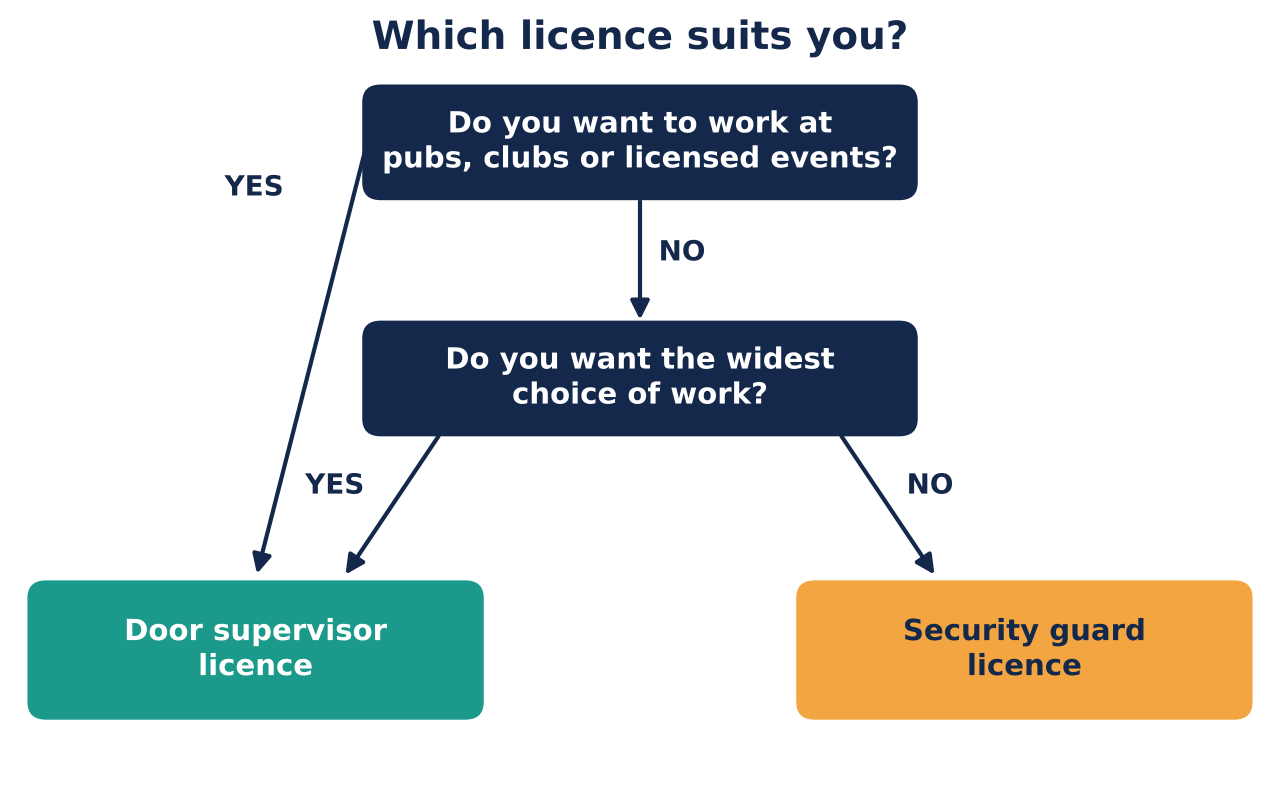
You want to work at pubs, clubs or licensed events
Choose the door supervisor licence. A security guard licence will not cover that work.
Whether a workplace counts as licensed premises depends on its licence, so ask the venue if you are unsure.
You want the widest choice of work
The door supervisor licence keeps more work open. The trade-off is a longer course, a slightly higher price and physical intervention training. The cost table below shows the gap.
You only want to guard premises or property
Premises includes vehicles and moveable structures, so guarding is not limited to buildings. The security guard licence covers that work with a shorter, cheaper course.
If you later want licensed-venue work, you would need to complete the door supervisor qualification and apply for that licence. Ask us about the door supervisor upskilling course if you already hold a security guard licence.
You have a role in mind
Job titles vary between employers, but the SIA licenses activities rather than titles. Judge a role by its duties: if it involves guarding licensed premises, it needs a door supervisor licence.
Ask the employer which licence the job requires before you book.
You may want to switch later
A door supervisor can switch to a security guard licence. The SIA’s Get Licensed booklet says they can then no longer lawfully carry out door supervision.
It also says they cannot get a door supervisor licence again without further training. Treat the switch as a one-way decision.
What each route costs in total
The course price is only part of the cost. The SIA licence fee of £204 is paid separately, and first aid may be an extra booking. For a wider breakdown, see how much an SIA licence costs in 2026.
| Route | Course price | Plus £204 SIA fee |
|---|---|---|
| Door supervisor | £199.99 | £403.99 |
| Door supervisor with first aid | £279.99 | £483.99 |
| Security guard | £179.99 | £383.99 |
| Security guard with first aid | £249.99 | £453.99 |
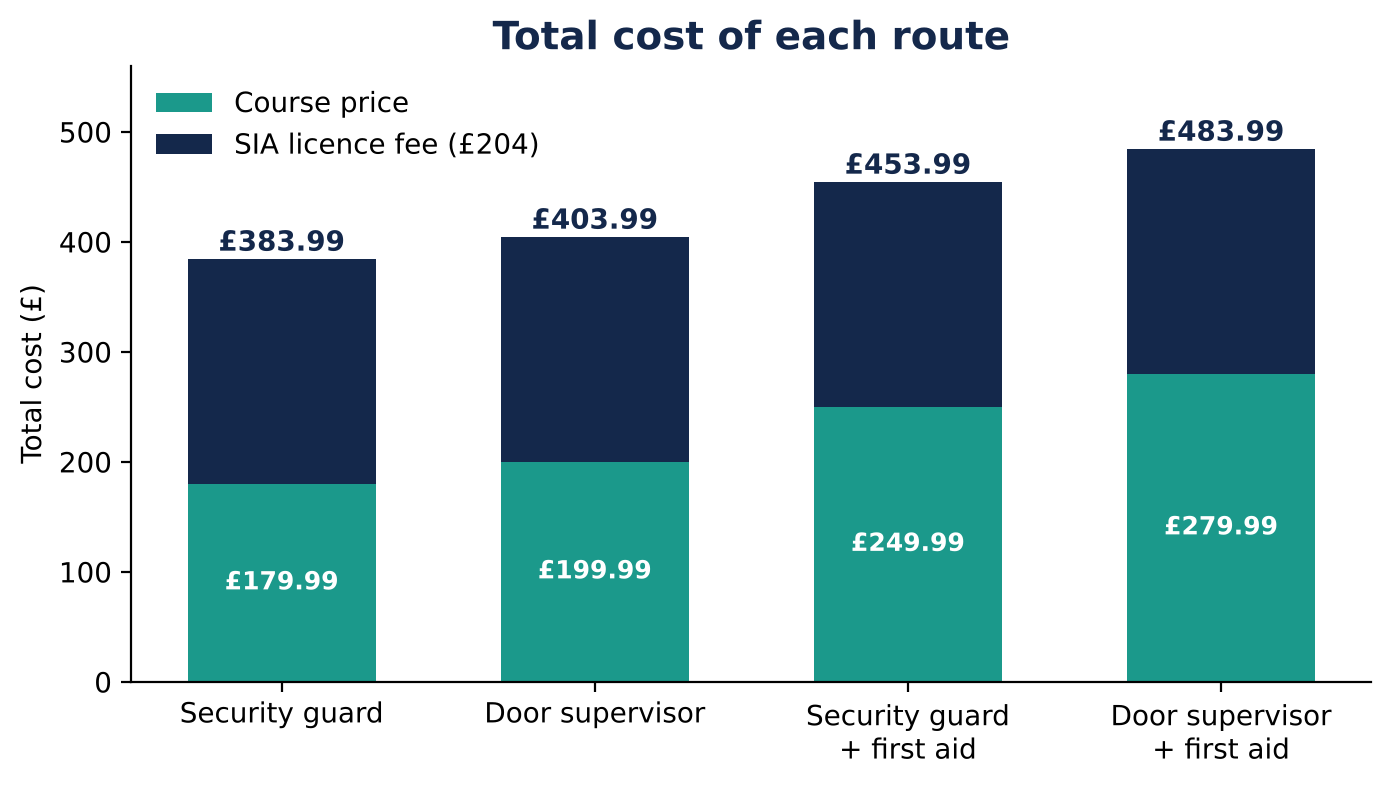
The course prices are Security Training UK’s current prices. The door supervisor route costs £20 more without first aid and £30 more with it.
Questions to ask a training provider
Ask these before you pay:
- Which awarding organisation issues the qualification?
- How many days does the course run?
- How will you check my English, and what evidence do you need?
- What first aid certificate do I need, and how much validity must it have?
- Is first aid included in the price, or is it a separate booking?
Not sure what to bring on the day? Check our documents required page.
What both licences require
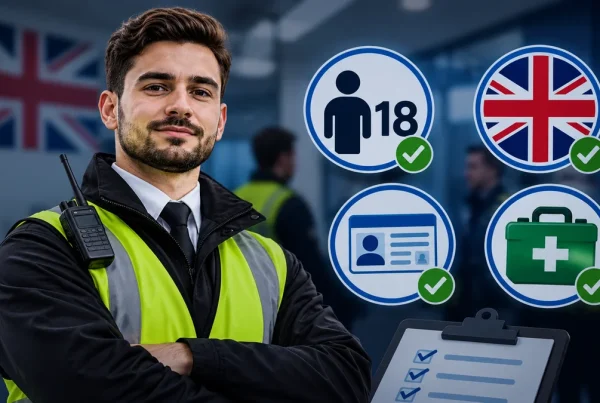
You must be 18 or over. The SIA also checks your identity, criminal record and right to work. The £204 fee is the same for either licence.
Already licensed? Read how to renew your SIA licence and the difference between top-up and refresher training.
Frequently asked questions
Do I need a licence to steward at an event?
Unpaid volunteering, checking tickets and directing people to seats or toilets are exempt. Refusing entry or removing someone is not, so check the guidance if your role goes further. Stewarding at sports grounds is a separate route: see our Level 2 Certificate in Spectator Safety.
What level of English do I need for SIA training?
You need reading, writing, speaking and listening skills equivalent to CEFR (Common European Framework of Reference for Languages) level B2. ESOL (English for Speakers of Other Languages) Level 1 and Functional Skills Level 1 in English also count. Your training centre checks this before you start.
Do the rules differ between the UK nations?
The SIA regulates the industry across the UK, and the learning outcomes are the same. Some content varies by nation, so tell your provider where you plan to work. In Scotland, the awards sit at SCQF (Scottish Credit and Qualifications Framework) Level 6.
Does a close protection licence cover both roles?
A close protection licence also covers both roles, but it needs a separate Level 3 qualification. That course costs £1,799.99 at Security Training UK and is aimed at close protection work. See our close protection training course in London.
Conclusion: match the licence to the work
The door supervisor licence suits you if licensed venues are in your plans or you want both roles covered. The security guard licence is enough if you only need to guard premises or property.
Before you book, read the SIA’s guidance on who needs a licence and confirm the licence your work requires. Ready to train? Book your course, contact our training team, or browse our door supervisor and security guard guides.